How did Castlery turn furniture into aUS$100m+ business?
Cut the middleman. Own the experience.
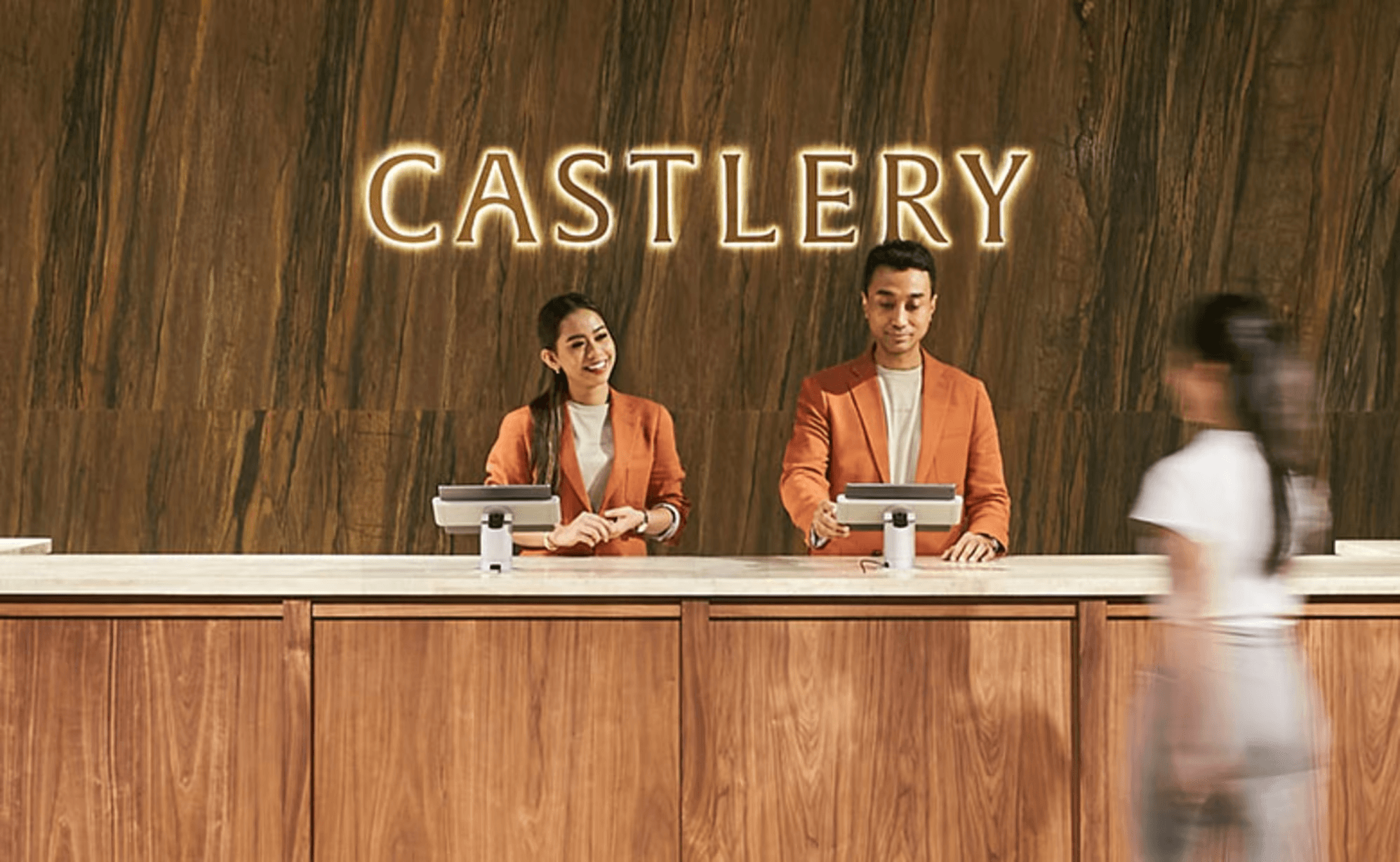
The Mid-Market Gap
Castlery found an underserved space between mass-market furniture and expensive designer brands. Instead of simply putting furniture online, it built a direct-to-consumer model around better design at accessible prices.
By working more directly with manufacturers, controlling more of its supply chain, and using digital distribution to reach customers, Castlery reduced layers of middlemen while building a brand positioned above mass-market furniture without designer-brand pricing.
The founder's journey
Key Milestones
From Law to Lehman
Declan Ee graduates from University College London and begins his career in investment banking at Lehman Brothers.
Castlery Launches
Ee and his co-founders identify an underserved gap between mass-market and expensive designer furniture and launch Castlery in Singapore as a digital-first furniture company.
Betting on the Supply Chain
The founders invest heavily in the business and deepen Castlery’s control over sourcing, operations and its supply chain.
Ee Goes Full-Time
Declan Ee leaves banking to focus fully on building Castlery.
Australia Tests the Model
Castlery expands into Australia but discovers that assumptions developed in Singapore do not translate perfectly overseas.
Reset and US Expansion
After learning from Australia, Castlery adjusts its international strategy and expands into the United States with a more data-driven, digital-first approach.
Pandemic Acceleration
The shift toward online shopping accelerates Castlery’s growth as consumers become increasingly comfortable buying furniture online.
US$100M+ Revenue
Castlery reports more than US$100 million in revenue for the financial year ending March 2022.
The product loop
The Scale Flywheel
International Scale
Larger Order Volumes
Better Unit Economics
Better Price × Design
More Customers
- ↻ International Scale
- SCALE ECONOMIES
As Castlery enters more markets and serves more customers, larger purchasing volumes can improve buying economics while logistics and marketing costs become more efficient relative to revenue. Those economics help Castlery maintain its proposition of well-designed furniture at accessible prices, attracting more customers and supporting further scale.
The competitive map
The competitive map
Castlery sits above mass-market furniture on design and positioning, remains more accessible than expensive designer furniture, and combines that proposition with a digitally native, omnichannel model.
Wayfair
Mass/broad market · Digital-first omnichannel
↳ Huge online furniture assortment
Castlery
Mid-premium · Digital-first omnichannel
↳ Design-led furniture at accessible prices
IKEA
Mass-market · Retail-heavy omnichannel
↳ Value-focused furniture
Crate & Barrel
Premium · Retail-heavy omnichannel
↳ Established premium home-furnishing brand
Mass Market ←→ Premium →
Lessons for builders
What ambitious founders should steal from this playbook.
Lesson 01
Find the Uncomfortable Middle
Castlery did not try to beat IKEA at being cheapest or luxury brands at being most prestigious. It targeted customers who wanted better design but could not justify designer prices.
New entrepreneursLesson 02
Own the Bottleneck
A beautiful website means little if a sofa arrives months late or damaged. Castlery invested in sourcing, inventory, logistics and supply-chain control because fulfilment is part of the product in furniture e-commerce.
E-commerce foundersLesson 03
Don’t Copy-Paste Product-Market Fit
What worked in Singapore did not automatically work overseas. Castlery’s difficult early experience in Australia forced it to rethink how it entered new markets and informed its later international expansion.
Startup teamsThe NBT Take
Castlery’s story is not simply about putting furniture online.
It found an uncomfortable gap between IKEA and expensive designer furniture, then rebuilt the buying experience around that customer: better design, fewer layers of middlemen, digital distribution and tighter control over the supply chain.
But perhaps the more useful lesson came when the model did not work perfectly. Castlery’s early struggles in Australia forced it to question whether product-market fit could simply be exported from one country to another.
The result was not abandoning physical retail or blindly committing to e-commerce. It was learning where digital works, where physical experiences still matter, and how scale can strengthen the economics behind both.
For founders, the lesson is simple: your moat may not be the channel through which you sell. It may be the system you build behind it.
Sources
- https://www.cnbc.com/2022/07/07/how-this-former-lehman-brothers-banker-built-a-pandemic-proof-business.html — www.cnbc.com
- https://cnaluxury.channelnewsasia.com/people/castlery-co-founder-declan-ee-furniture-singapore-207086 — cnaluxury.channelnewsasia.com
- https://pitchbook.com/profiles/company/439923-25 — pitchbook.com
- https://www.maersk.com/news/articles/2023/04/11/the-castlery-story — www.maersk.com
- https://www.crunchbase.com/organization/castlery — www.crunchbase.com
- https://www.glassdoor.com/Interview/Castlery-Interview-Questions-E1809872.htm — www.glassdoor.com
- https://www.forbes.com/sites/omaidhomayun/2024/12/18/how-castlery-has-made-luxury-living-attainable/ — www.forbes.com
- https://business.google.com/us/think/ai-excellence/ai-challenger-brand-strategy-castlery/ — business.google.com
- https://www.linkedin.com/posts/metaforbusiness_performance-talks-episode-alert-activity-7308291106989842432-bB2h — www.linkedin.com
Written by Javier Cheng with help from NBT'S Mosaic on 14 Sept 2026.