How did Ninja Van scale one van into aSoutheast Asian logistics network?
Software meets the last mile.
The Software Behind the Parcel
Ninja Van saw that Southeast Asia’s e-commerce boom would create a logistics problem: millions of parcels had to move through fragmented cities and markets reliably and cheaply.
Instead of treating delivery as simply a fleet of drivers and vans, Ninja Van built technology into the logistics layer itself. Algorithms could optimise routes, digital systems could track parcels in real time, and data could help coordinate increasingly complex delivery operations.
The advantage was not just delivering a parcel. It was building infrastructure capable of coordinating millions of them.
The founder's journey
Key milestones
One Fashion Brand, One Logistics Problem
Lai Chang Wen, Shaun Chong and Boxian Tan find that logistics is a major pain point while operating their fashion business. They found Ninja Van in Singapore to solve the delivery problem.
Born From a Second-Hand Van
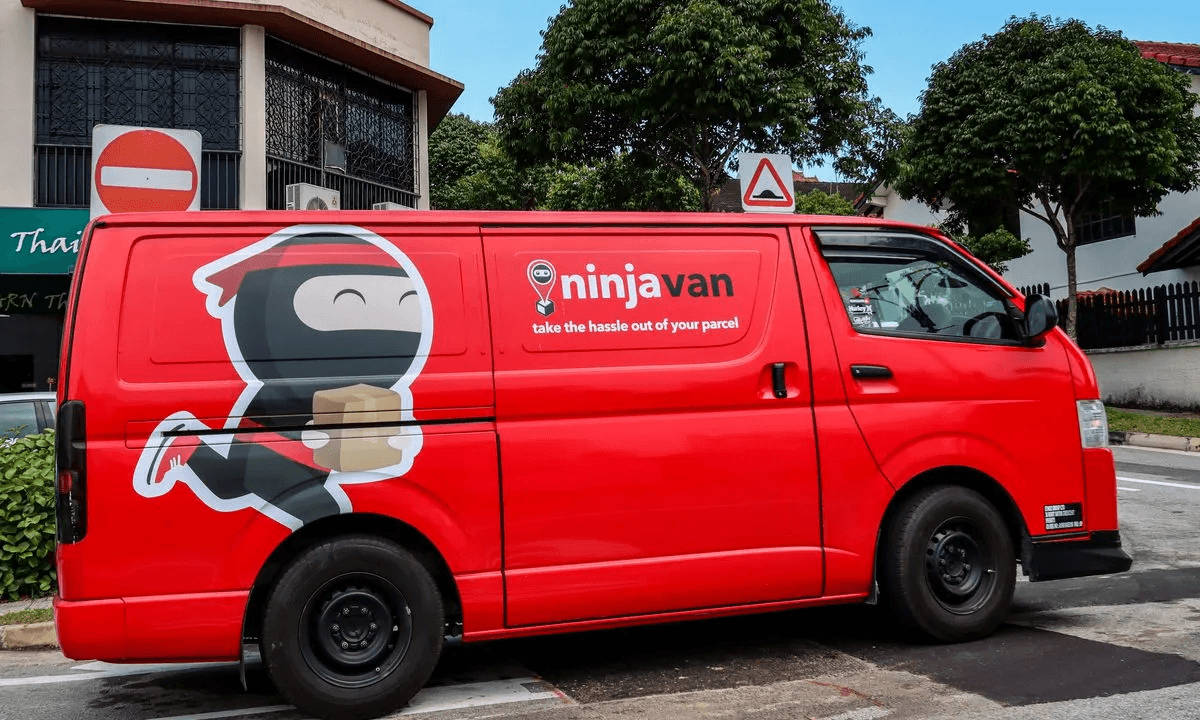
The founders begin operations with a second-hand van while building technology to improve the delivery process, including route optimisation and real-time parcel tracking.
Across Southeast Asia
Ninja Van expands beyond Singapore as e-commerce grows across the region, eventually building operations across six key markets: Singapore, Malaysia, Indonesia, Vietnam, the Philippines and Thailand.
US$87M Series C
Ninja Van raises US$87 million in its Series C as investors back its regional expansion.
US$279M Series D
Ninja Van raises approximately US$279 million as e-commerce demand accelerates and the company continues expanding its logistics infrastructure.
US$578M Series E
Ninja Van raises US$578 million in a Series E. Contemporary reporting places its valuation above US$1 billion, though a company spokesperson declined to confirm that valuation.
The product loop
The Density Flywheel
More Merchant Volume
More Parcels per Route
Greater Delivery Density
Better Asset & Driver Utilisation
Lower Cost per Delivery / Better Service Economics
More Competitive Merchant Offering
- ↻ More Merchant Volume
- DENSITY ECONOMIES
Last-mile logistics becomes more efficient when more parcels can be delivered across overlapping routes and existing infrastructure. Greater parcel density can improve utilisation of drivers, vehicles, sorting facilities and routes, strengthening the economics of the network as volume grows.
Technology strengthens this flywheel by helping Ninja Van optimise routes, track parcels and coordinate increasingly complex logistics operations.
The competitive map
The competitive map
Ninja Van’s position is that of a technology-driven regional logistics player built around Southeast Asian commerce, not simply a last-mile courier. Its services now extend into warehousing, fulfilment, freight and broader supply-chain solutions.
GrabExpress
On-demand/local delivery
↳ Platform-based urban delivery
Ninja Van
Tech-enabled integrated logistics
↳ Strong Southeast Asian e-commerce focus
J&T Express
Large-scale parcel delivery
↳ Regional e-commerce logistics network
DHL
Integrated logistics
↳ Large global network and broad logistics capabilities
On-Demand / Local ←→ Integrated Logistics →
Lessons for builders
What ambitious founders should steal from this playbook.
Lesson 01
Solve the Bottleneck Behind Your First Idea
Ninja Van did not begin because its founders dreamed of running a logistics empire. Their original fashion business exposed a more painful problem: delivery. Sometimes the infrastructure problem behind your startup is more valuable than the startup itself.
Early-stage foundersLesson 02
Turn Operations Into Software
Logistics looks physical: vans, warehouses and parcels. But Ninja Van treated information as part of the infrastructure. Route optimisation, tracking and data systems helped make increasingly complex physical operations manageable at regional scale.
Tech foundersLesson 03
Density Can Be a Moat
In physical-network businesses, scale is valuable when it makes the underlying system more efficient. More parcel volume can increase route density and utilisation, improving the economics of the network.
Marketplace & logistics foundersThe NBT Take
Ninja Van began with a strangely simple observation: the delivery problem behind an e-commerce business could be bigger than the business itself.
The founders could have treated logistics as an unavoidable operating cost. Instead, they turned the bottleneck into the company.
But Ninja Van’s deeper lesson is not simply “use technology.” Parcels still need drivers, warehouses, sorting systems and vehicles. Software becomes valuable when it makes those physical operations work better: deciding where parcels go, optimising routes, tracking deliveries and coordinating an increasingly dense network.
That distinction matters for founders building in the physical world.
You do not always need to replace the physical system with software. Sometimes the opportunity is to make the physical system programmable.
Sources
- About Ninja Van — Ninja Van
- Ninja Van Case Study — Google Cloud
- How failure inspired three friends to build Ninja Van — CNBC
- Singapore’s logistics startup Ninja Van raises US$279M — TechCrunch
- Ninja Van secures US$578M Series E — TechCrunch
- End-to-End Logistics Solutions — Ninja Van
Written by Javier Cheng with help from NBT'S Mosaic on 21 Sept 2026.