How did ShopBack grow froma 6-person startup to 20 million shoppers?
From a Singapore startup founded by former e-commerce operators to a global shopping-rewards platform
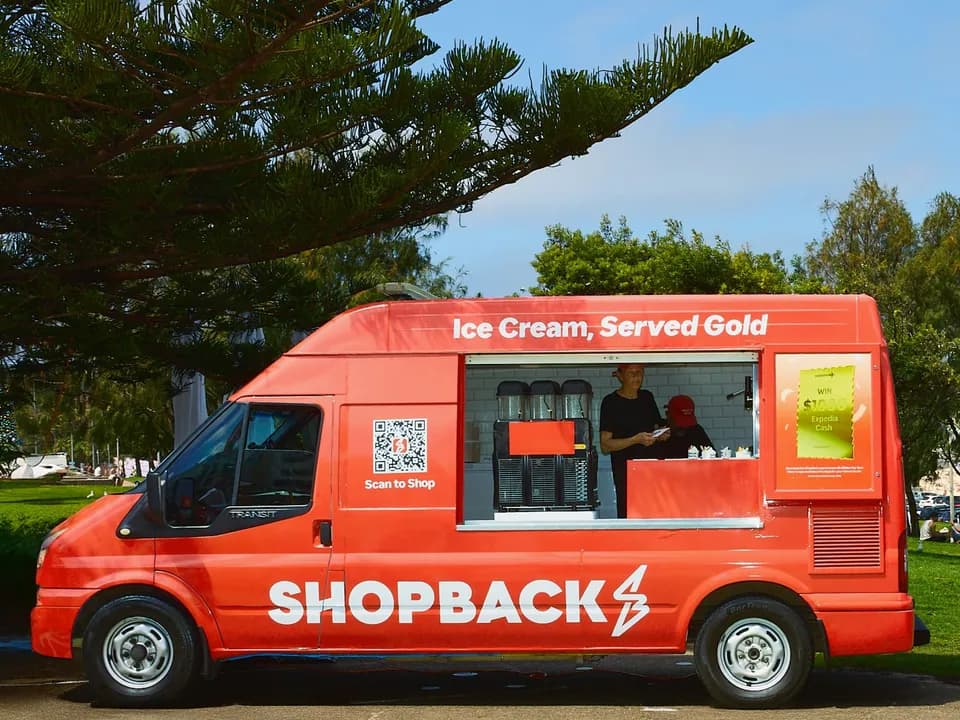
The Engagement Loop
ShopBack made cashback feel more active by combining a practical rebate with discovery, quests, bonuses and game-like rewards.
ShopBack expanded cashback beyond a passive rebate by adding merchant discovery, coupons, quests, games, limited-time bonuses and other reward mechanics. These features give shoppers more reasons to explore the platform before making a purchase, rather than treating it purely as a directory of cashback links.
The founder's journey
ShopBack’s journey so far
ShopBack launches in Singapore
Henry Chan and Joel Leong developed the initial idea after gaining experience in e-commerce and assembled a six-person founding team. Working with co-founder Bryan Chua, the team developed an early prototype before launching ShopBack in Singapore in August 2014.
US$600,000 seed round
ShopBack raised US$600,000 in seed funding led by East Ventures, with participation from Accel-X, to grow the platform after its initial launch.
US$25 million funding round
ShopBack raised US$25 million in a round led by Credit Saison to support regional expansion and product development, bringing its total funding at the time to nearly US$40 million.
ShopBack acquires hoolah
ShopBack agreed to acquire BNPL provider hoolah, expanding its payments capabilities and preparing to add instalment payments to its rewards platform.
ShopBack launches ShopBack Pay
ShopBack introduced ShopBack Pay as a payment product that allowed shoppers to pay and earn cashback through the same platform. It later introduced ShopBack PayLater using hoolah’s technology.
ShopBack exits its own BNPL service
ShopBack discontinued ShopBack PayLater in Singapore and Malaysia, while continuing to develop its cashback, rewards and payment offerings.
ShopBack enters the United States
ShopBack launched in the U.S. with more than 2,000 merchant partners, extending its cashback, shopping quests, coupons and game-based rewards into a major new market.
The product loop
How ShopBack grows
Shoppers discover a merchant, offer or reward through ShopBack
They click through and complete an eligible purchase
The merchant pays ShopBack a referral commission
ShopBack shares part of that commission as cashback
Bonuses, quests, games and referrals encourage future use
- ↻ Shoppers discover a merchant, offer or reward through ShopBack
- SCALE LOOP
More shoppers can make ShopBack more attractive to merchants. More merchant partnerships then broaden the selection of rewards and offers available to shoppers, helping the platform attract and retain more users.
The competitive map
Who else competes for Singapore shoppers?
In Singapore, ShopBack sits alongside cashback, points and rewards products that all try to own the moment before a shopper pays.
yuu
Points across everyday Singapore brands
↳ Built around a shared loyalty currency for groceries, convenience stores, food delivery and other frequent purchases.
ShopBack
Cashback across online stores, travel, games and selected deals
↳ Starts from merchant discovery, then rewards the completed purchase with cash back.
Fave
Deals, payments and merchant-funded cashback
↳ Strong for local dining, wellness and lifestyle merchants where cashback offsets future purchases.
HeyMax
Vouchers and rewards that convert spend into miles
↳ Appeals to Singapore shoppers who prefer travel rewards over direct cashback.
Cashback-led <-> Points-led →
Founder mode
How the founding team started
Henry Chan and Joel Leong began discussing business ideas after gaining experience in e-commerce. They saw an opportunity to build a shopping platform that returned part of merchants’ referral commissions to consumers. Together with Bryan Chua and the rest of the founding team, they developed an early prototype and launched ShopBack in Singapore in 2014.
Lessons for builders
What ambitious founders should steal from this playbook.
Lesson 01
Add engagement around genuine utility
Functional products can become more engaging when progress, discovery and occasional rewards are made visible. ShopBack’s quests, bonuses and game features show how light gamification can complement a practical financial benefit.
Consumer app buildersLesson 02
Build from relevant experience
The founders drew on experience in e-commerce and partnerships rather than entering an entirely unfamiliar industry. That domain knowledge helped them understand merchant acquisition, referral commissions and online-shopping behaviour.
Pre-revenue teamsLesson 03
Expand into more customer moments
Online-only cashback leaves a significant part of everyday retail spending outside the platform. Adding rewards at participating physical merchants allows a cashback company to serve more shopping occasions.
B2C marketplace foundersThe NBT take
The strategic idea was to make ShopBack more than a coupon directory: a place where cashback, offers, payments and reward mechanics come together.
— The NBT interpretation
ShopBack shows how a simple financial utility can grow into a broader consumer platform. Cashback remained the core incentive, but merchant discovery, coupons, payment products, quests and game-based rewards gave shoppers more ways to engage with the brand. The lesson is not merely to offer a discount, but to build an experience around how users discover, earn and return.
Sources
- ShopBack corporate site — corporate.shopback.com
- ShopBack launches in the U.S. — PR Newswire
- ShopBack acquires hoolah — TechCrunch
- ShopBack discontinues PayLater — The Business Times
- ShopBack secures US$600K seed funding — DealStreetAsia
- ShopBack raises US$25M — TechCrunch
- Founding team context — TODAY
- yuu Rewards Club overview — yuu Rewards Club
- Fave cashback overview — Fave Help Centre
- HeyMax vouchers overview — HeyMax Help Center
Written by Javier Cheng with help from NBT'S Mosaic on 30 Jul 2026.